
 Gaurav
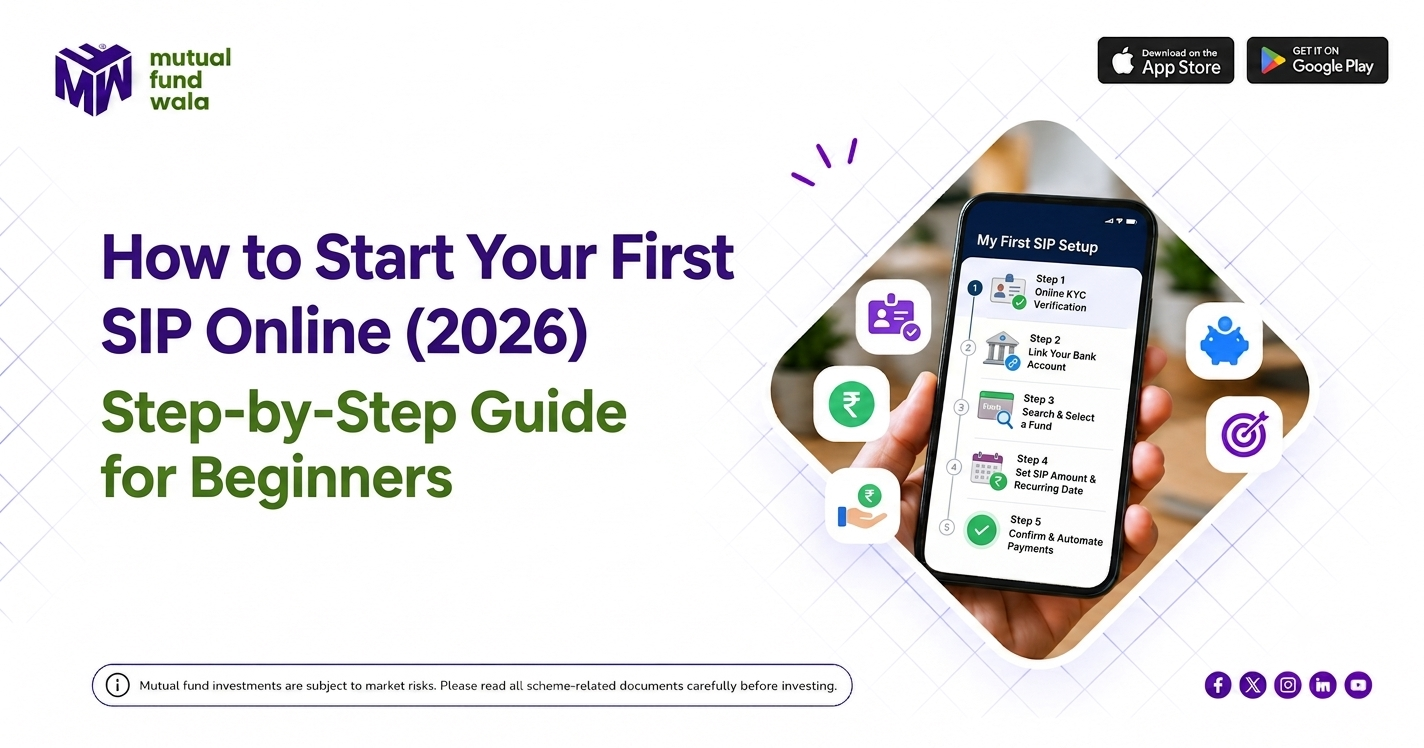
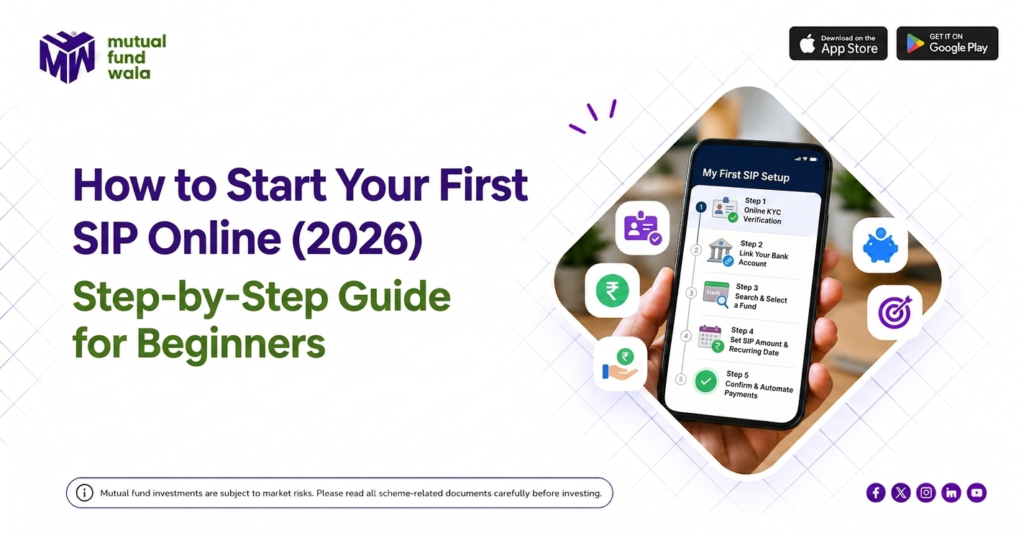
Learning how to start an SIP online is a simple first step towards investing in mutual funds. A Systematic Investment Plan (SIP) allows you to invest a fixed amount in a mutual fund scheme at regular intervals, such as monthly, instead of investing a large amount at once.
Before starting your first SIP, you need to understand the basic process. This includes completing your Know Your Customer (KYC) requirements, choosing a suitable mutual fund, deciding how much to invest, and setting up your monthly payment.
In this guide, we explain how to start an SIP online step by step, including the documents required, minimum investment amounts, and factors to consider when selecting a mutual fund. Whether you are a first-time investor or exploring SIPs for the first time, these steps will help you understand the process.
What Is a SIP and How Does It Work?
A SIP is a method of investing a fixed amount in a mutual fund scheme at regular intervals, such as monthly. Instead of investing a large amount at once, you spread your investments over time. For example, if you start a monthly SIP of ₹2,000, you will invest ₹24,000 over one year, excluding any returns or changes to your contributions.
A SIP is not a separate investment product. It is simply a way to invest in a mutual fund. Your money is invested in the scheme you select, and its value changes with the performance of the underlying investments. SIPs can make investing more manageable because you can start with a relatively small amount and develop a regular investing habit.
How to Start SIP Online: 6 Easy Steps
Step 1: Set Your Financial Goals Before Starting a SIP
Before you choose a mutual fund, determine why you want to invest. Your financial goal will help you decide which type of fund to choose, how much to invest, and how long to stay invested. For example, your goals could include:
- Building a retirement corpus
- Saving for a child’s education
- Accumulating a down payment for a house
- Building long-term wealth
- Saving for a planned expense
This is an important step in SIP for beginners because different goals have different investment horizons. If you are investing for a goal that is 15 or 20 years away, equity mutual funds may be worth considering, depending on your risk tolerance.
However, if you need the money within the next two or three years, equity funds may expose you to more short-term volatility than you can comfortably accept. Your investment horizon should therefore guide your fund selection rather than choosing a scheme simply because it has delivered high returns recently.
Step 2: Complete the SIP KYC Process
Before starting, keep your PAN, accepted identity and address proof, bank account details, registered mobile number and email address handy. You may also need to complete a photograph, video verification or another prescribed authentication process, depending on your KYC method and platform. The exact requirements depend on your existing KYC status and the process you use. Completing the required KYC verification is an important step when learning how to start SIP online for the first time.
The SIP KYC process typically involves the following steps:-
- You can verify your KYC status on KRA portals or through SEBI-registered KRAs.
- Enter your personal details, including your name, date of birth, and PAN.
- Provide the required identity and address information.
- Complete the prescribed verification process, which may involve Aadhaar-based authentication, a video verification process or other permitted methods.
- Submit the application and check your KYC status.
The exact process may vary depending on the platform and your existing KYC status. If your KYC is already valid, you may not need to complete the entire process again. However, you may need to update your details or provide additional information if required.
Documents required for SIP KYC
Keep the following information and documents handy before starting:
- PAN card: Generally required for mutual fund investments.
- Identity proof: Aadhaar or other permitted identity proof like passport, Voter ID.
- Bank account details: Needed to make investments and register for automatic payment mandate.
- Mobile number and email address: Used for verification, transaction alerts, and account communication.
- Image capture: May be requested as part of the verification process.
The exact documents required for SIP KYC depend on the method you use and whether your existing KYC records are complete. Check the requirements on the official platform before submitting your application.
Step 3: Decide How Much to Invest
Your first SIP does not need to be large. It should be an amount you can invest regularly without affecting essential expenses, emergency savings or existing financial commitments. Many mutual fund schemes allow SIP investments starting at ₹500 per month, while some offer even lower amounts. The actual amount depends on the scheme’s terms.
For example, consider the following monthly investment amounts. These figures represent your contributions, not the future value of your investment.
If you are looking for the minimum SIP amount for beginners, ₹500 can be a starting point. You can increase the amount later as your income grows.
But what is the best SIP amount to start with?
There is no universal answer. You should start with an amount that fits your budget and future financial goals. For instance, if you can comfortably invest ₹2,000 each month after accounting for essential expenses and savings, you could consider that amount rather than stretching your budget to invest more.
Step 4: Choose a Suitable Mutual Fund
Once you have identified your goal and investment amount, the next step is choosing a mutual fund. Understanding how to choose a mutual fund for SIP involves looking beyond short-term returns. You need to consider the fund’s investment objective, risk level, portfolio, costs, and suitability for your investment horizon.
Here are some factors to examine:
Investment category:
Understand whether you need an equity, debt, hybrid, or another type of mutual fund. This depends on your investment horizon and risk tolerance. Each category carries different risks and serves different purposes.
Investment horizon:
Your investment horizon should dictate the investment category. For instance, equity funds can experience significant short-term fluctuations, making them more suitable for long-term investors who can remain invested through market cycles. On the other hand, debt funds may be suitable for short-to-medium-term investors.
Risk tolerance:
Risk tolerance is another factor in choosing an investment category. Determine how much volatility and temporary losses you can tolerate without abandoning your investment plan. Equity funds may be a suitable investment if you have a higher risk tolerance. Conversely, debt funds may be suitable for investors with a lower risk tolerance.
Portfolio and investment strategy:
Understand where the fund invests and whether its strategy matches your investment objective.
Performance:
Compare a fund’s performance with its benchmark and other funds in the same category over relevant periods. You should not select a fund solely because it topped the return charts in the latest year. Also check the Standard Deviation, Sharpe Ratio and Sortino Ratio.
Expense ratio:
This is the annual cost charged by the fund as a percentage of its assets. Other things being equal, costs affect the returns investors receive.
If you are learning how to invest in SIP step by step, remember that selecting the right scheme for your circumstances matters more than choosing a fund based on popularity.
Step 5: Select a Platform and Start the SIP Online
Once you have selected a mutual fund, you can start your SIP online through the fund house’s official website or an eligible investment platform such as MutualFundWala. How to invest in SIP online may differ slightly across platforms, but the broad steps are similar:
- Create an account or sign in to your existing account.
- Complete the required KYC (if you don’t have it) and investor verification.
- Search for the mutual fund scheme you have selected.
- Choose the investment option and plan (Direct or Regular).
- Enter the monthly SIP amount and preferred instalment date.
- Provide your bank details and register the required payment mandate.
- Review the information and submit the request.
You can buy a direct plan without a distributor, while a regular plan involves a distributor and generally has a higher expense ratio. The services and support available can also differ. Before confirming the transaction, check the scheme name, plan, SIP amount and frequency.
Also review the scheme documents to understand its risks, exit load, if any, and other relevant terms. Once the SIP is registered and the mandate is active, the instalments can be debited automatically according to the registered schedule.
Step 6: Track Your SIP and Review It Periodically
Once the investment is processed, you also need to check whether your investment remains aligned with your financial goals. You do not need to monitor your fund’s return every day. Instead, review your investment once a year and examine whether the fund’s strategy, risk level, and performance remain suitable.
You can also review your monthly contribution as your income changes. For instance, if your salary increases, you may consider increasing your SIP through a step-up SIP rather than keeping the contribution unchanged for several years. Similarly, if your fund underperforms for a long period, then examine its performance against the benchmark and category peers, along with any changes in its investment strategy, before making a decision.
Common Mistakes to Avoid When Starting a SIP
A few common mistakes can make it harder to stay invested over the long term.
- Choosing a fund only on past returns: Recent performance may not continue in the future.
- Investing without a clear goal: Your goal and time horizon should guide the fund selection.
- Starting with an unaffordable amount: A sustainable contribution is generally easier to maintain.
- Ignoring risk: Mutual funds are market-linked investments and do not offer guaranteed returns.
- Stopping a SIP during every market decline: Market volatility is part of investing, particularly in equity funds. Review your goals and risk tolerance before making changes.
- Failing to review your investment: Your fund and contribution should continue to suit your needs as they evolve.
FAQs
Can I start a SIP with ₹100?
Yes. Many mutual fund schemes allow SIP investments starting at ₹100 per month, although the minimum amount varies by scheme.
Is a demat account required to start a SIP?
No, you generally do not need a demat account to invest in mutual funds. You can hold most mutual fund units without one. However, you may choose to hold eligible units in demat form, while ETFs are generally held and traded through a demat account.
Can I stop or increase my SIP later?
In most cases, you can modify, pause or cancel a SIP. You may also be able to increase your contribution through a Step-up SIP facility.
What documents are required to start a SIP in India?
You generally need a PAN card, valid KYC details including address proof, bank account information, a registered mobile number and an email address.
How do I choose the right mutual fund for my SIP?
Choose a mutual fund based on your financial goals, investment horizon, and risk tolerance. You can compare its performance with the benchmark, expense ratio, portfolio, and risk level before deciding whether it suits your needs.