
 Shashi Kant Bahl
Lumpsum Return Calculator
See how a one-time investment can grow before you commit capital. This lumpsum return calculator projects your maturity value based on tenure, expected returns, and compounding frequency, so you can evaluate the strength of your lumpsum investment with clarity.
AMFI Registered Mutual Fund Distributor
Free to Use, No Sign-up
Built for Indian Investors
Lumpsum Planner
Estimate returns on a one-time investment with precision.
YOUR LUMPSUM RETURN ESTIMATE
WEALTH COMPOSITION
Lumpsum Calculator: Know What Your One-Time Investment Can Become
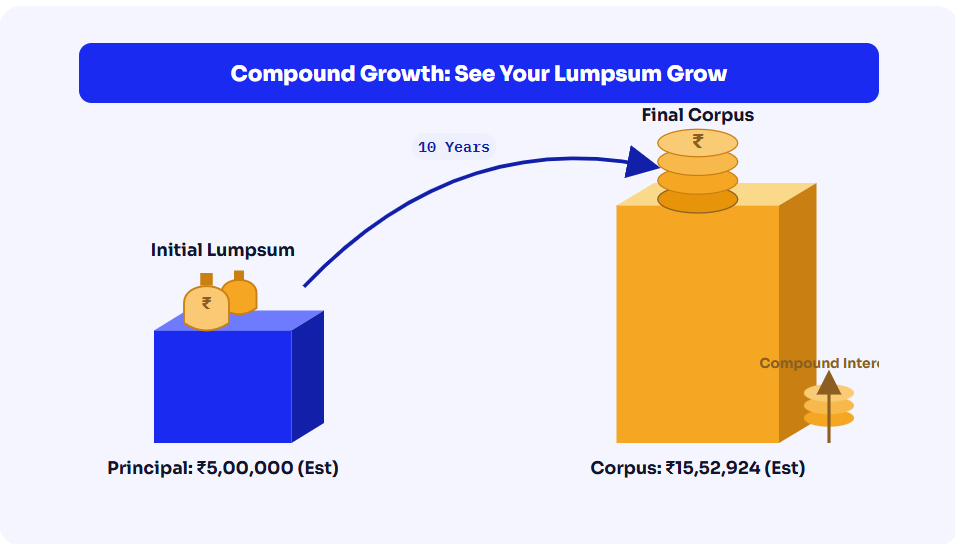
Compound growth: how ₹5,00,000 invested today becomes ₹15,52,924 in 10 years at 12%.
Investing a large sum at once often raises a different set of questions. Unlike SIPs, which build wealth gradually through discipline, a lump-sum investment demands clarity up front. You need to know what your money can realistically grow into.
This is where a lump sum return calculator becomes essential. It helps you translate a one-time investment into a future value, giving you a clear direction before you commit capital.
What This Lumpsum Mutual Fund Calculator Does
This lumpsum return calculator helps you evaluate investments clearly by allowing you to:
- Find the final value of a one-time (lump sum) investment using a lumpsum mutual fund calculator
- Track the growth of your investment over time with a mutual fund return calculator
- Understand the difference between money invested and wealth created through an MF return calculator
This gives you a clear picture of how effectively your lumpsum investment calculator has performed.
How to Use the Mutual Fund Return Calculator
- Enter your initial investment amount in this lumpsum calculator
- Provide the current value or final corpus of your investment
- Enter the start date and investment duration
- View the absolute return and annualized return using this mutual funds returns calculator
You can use this returns calculator to compare different funds, strategies, or time periods before making decisions.
When This Lumpsum Mutual Fund Calculator Is Useful
- Reviewing whether a fund has delivered returns in line with expectations
- Comparing returns from different investments before switching
- Understanding the impact of starting early versus delaying investments
Past performance does not guarantee future returns. Use this mutual fund lumpsum calculator as a reference only, and always consider risk, time horizon, and suitability before investing.
What Is the Lumpsum Return Calculator and Why It Matters
A lump-sum return calculator estimates how much your one-time investment can grow over time, based on an assumed rate of return.
Whether you search for a lump sum calculator, return calculator, or even a commonly mistyped lump sum calculator, the intent remains the same. Investors want clarity on outcomes before making decisions.
Tools like a mutual fund return calculator bring structure to this process, especially when dealing with large amounts.
How the Mutual Fund Lumpsum Calculator Works
A mutual fund lump-sum calculator, or lump-sum mutual fund calculator, works on the principle of compounding.
You enter three inputs: the investment amount, the expected return, and the time horizon. The calculator then projects the future value.
This is why variations like the MF calculator lumpsum, the lumpsum MF calculator, and the mutual fund calculator lumpsum are widely used. They all aim to simplify the same calculation. Over longer periods, even small differences in return assumptions can significantly impact the final corpus.
Lumpsum Investment Calculator and Time Advantage
Time plays a defining role in lump-sum investing.
A lump sum investment calculator shows how staying invested for longer periods enhances returns. Compounding becomes more powerful with time, not just higher returns. This is particularly relevant for long-term goals such as retirement or wealth creation, where patience becomes a key driver of outcomes.
Lumpsum Calculator With Inflation for Real Returns
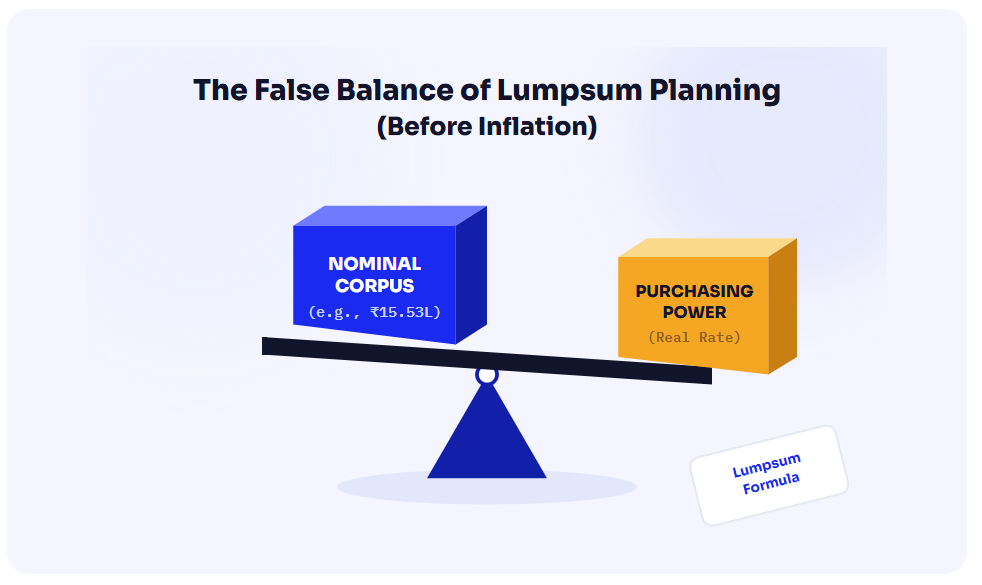
The nominal corpus looks larger — but only real purchasing power tells you what it can actually buy.
Looking at returns without considering inflation can be misleading.
A lump sum calculator with inflation adjusts your future value to reflect real purchasing power. It answers a more relevant question: what your money will actually be worth in today’s terms.
For long-term investors, this provides a more realistic perspective than nominal returns alone.
Different Types of Lump Sum Calculators Investors Use
Investors often come across multiple versions of the same tool.
A mutual fund lump-sum return calculator or lump-sum mutual fund calculator may differ slightly in their interfaces, but the core function remains identical.
Even search variations like “lumpsum calculator” or repeated queries like “mutual fund calculator lumpsum” highlight how investors approach the same need from different angles. At the core, all of them rely on compounding.
How to Calculate Mutual Fund Return Manually
While calculators simplify the process, understanding the basics adds confidence.
To understand how to calculate mutual fund return, you need to apply compound interest principles. This helps answer questions such as how to calculate a mutual fund’s return and how mutual funds calculate returns.
You can also explore metrics like annualized returns, which explain how to calculate the annualized rate of return and the rate of return across different time periods. For broader financial analysis, concepts such as calculating percentage return on investment and return on capital employed are also used, though they are more relevant to business performance.
When Should You Choose a Lump Sum Mutual Fund Investment
A lump-sum mutual fund approach works best when you have a long investment horizon and a clear objective.
It is suitable when you have surplus funds ready to deploy and do not want to stagger investments over time. However, market timing remains uncertain, which is why some investors prefer combining a lump sum with staggered strategies.
Using an MF return calculator or returns calculator before investing helps set realistic expectations.
Final Thought
A lump sum return calculator by MutualFundWala is not just a tool for projections. It is a tool for discipline.
It forces you to think in terms of time, returns, and outcomes before investing. Whether you use a mutual fund returns calculator, a lump sum investment calculator, or a basic return calculator, the objective remains the same: clarity with MutualFundWala.
Because when you know where your investment is heading, your decisions become more structured and less reactive with MutualFundWala guiding you.
Popular Calculators
How to use the Lumpsum Return Calculator
Four inputs stand between you and a clear projection of your one-time investment.

Enter the investment amount
The one-time sum you plan to invest today.

Set the period
How many years the investment will stay invested.

Add the expected return rate
The annual return you expect the investment to earn.

Choose a compounding frequency
Annual, quarterly, monthly, or daily — pick what matches your fund.
Review invested amount vs returns
See the maturity value and how much of it is pure growth.
FAQs – Lumpsum Return Calculator
What is a lump sum return calculator?
It is a tool that estimates the future value of a one-time investment based on an assumed return rate and time period.
How does the mutual fund lump-sum calculator work?
It uses compounding to project how your investment grows over time at the return rate and compounding frequency you choose.
What is a lumpsum investment calculator?
It helps calculate the future value of a single investment made today, based on tenure and expected returns.
How do I calculate mutual fund returns manually?
You can apply compound-interest formulas, or calculate annualised returns based on the invested amount, maturity value, and duration.
What is a lump sum calculator with inflation?
It adjusts the projected future value for inflation, so you see the investment’s real purchasing power rather than just the nominal number.
How is the effective annual rate calculated?
It converts your entered return rate and compounding frequency into a single equivalent annual rate, making different frequencies easy to compare.
Is a lump-sum investment suitable for beginners?
It depends on risk tolerance, time horizon, and market conditions. Long-term investors with surplus funds may find it more suitable.
What is the mutual fund return calculator used for?
It helps estimate likely returns from a mutual fund investment using inputs such as the amount invested, tenure, and expected return.
Grow Your Wealth With a Lumpsum Plan
Estimate your maturity value and invest with clarity today.


Get Investment Assistance
A projection is a starting point — a strategy is what gets you there. Share a few details and our team will help you decide whether a lumpsum, a SIP, or a mix fits your goal best.
- One-on-one guidance from a registered adviser
- A strategy that balances lumpsum and SIP investing
- No obligation — just a clearer plan